Industrial automation has become a key element in the manufacturing sector to improve efficiency, quality and productivity. Two important branches in the field of industrial automation are custom-made machinery and retrofitting, which allow the optimization of production processes.
Both custom-built machinery and retrofitting are powerful tools for promoting industrial automation. Each approach has its specific advantages and can be tailored to the needs of each individual company. While tailor-made machinery allows you to design unique solutions suited to specific needs, retrofitting allows you to optimize the use of existing systems by taking advantage of the latest technologies available. In both cases, the ultimate goal is to improve efficiency, increase productivity and gain competitive advantages.
Custom-made machinery
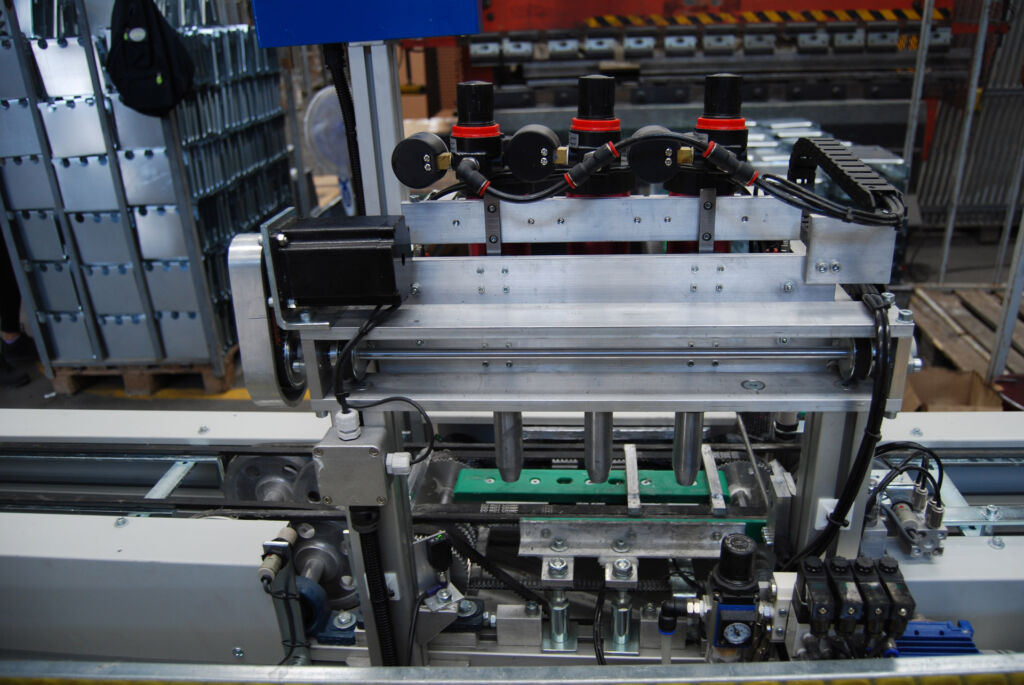
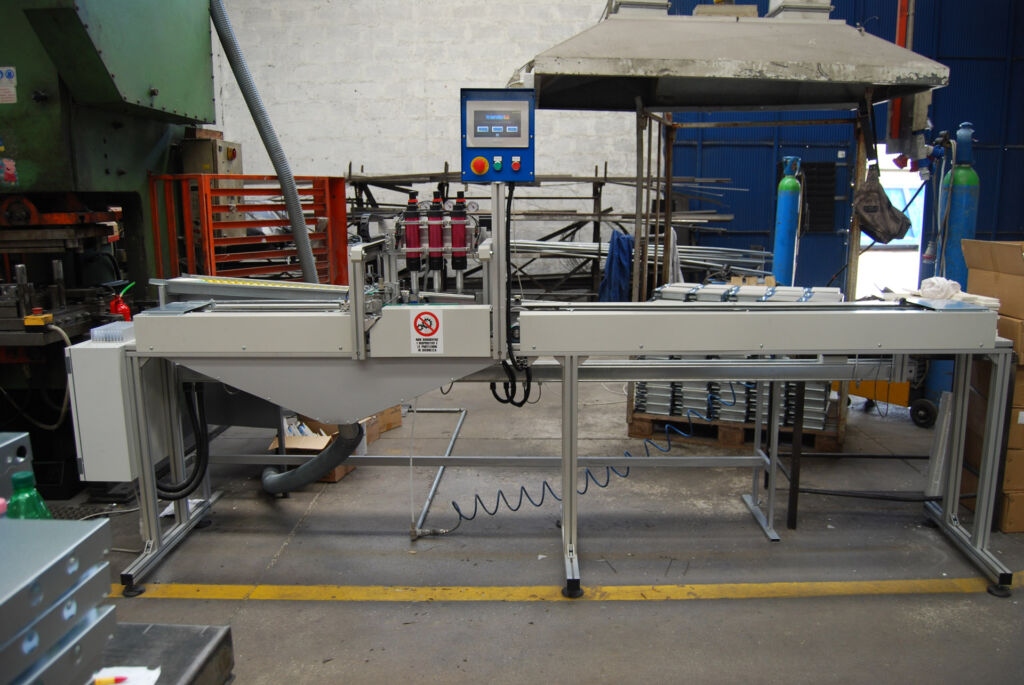
that is, they are designed according to the customer’s needs, to carry out a phase of the production process that had previously always been manual. Elmetec conceives, designs and produces finished machines, from start to finish. Our company uses technologically advanced and high quality mechanical components, also directly taking care of the production of many mechanical parts.
From the design, through the use of 3D drawing software, up to the production which is almost entirely carried out with the aid of numerical control machinery, then moving on to the final assembly, we guarantee maximum precision and reliability in every small detail.
Elmetec also collaborates with the Faculty of Engineering of the University of Perugia to carry out some projects.
How does this process work?
Feasibility study: i.e. whether automation is convenient from an economic point of view (whether it is worth applying it or not) and practical. In fact, it may happen that, in certain cases, the costs to be incurred are so high that they cannot then be reabsorbed by the production process, and therefore it is not a priori advantageous to automate that specific work phase (Elmetec therefore gives good advice, rather than wanting everyone to the costs to build the machinery).
Design: study of the components, movements and all the relevant variables
Realization
Test phase: before delivery, the machine is tested and subjected to severe tests.
we can provide a guarantee on the machinery because we take care of the production process internally.
Retrofitting is a process of updating and renewing existing machine tools to make them more efficient, reliable and in line with the latest technologies available. This process is particularly important for companies that want to improve productivity without having to purchase new machines.
IRetrofitting is the set of technical and mechanical operations aimed at modernizing, reconditioning and automating existing infrastructures. Retrofitting allows you to extend the useful life of machinery, improving its performance and efficiency.
The machine tool retrofitting process involves several phases:
1. Initial evaluation: The current conditions of the machine tools are analyzed and the necessary improvements are evaluated. This may include replacing obsolete components, upgrading digital controls or implementing automation systems.
2. Design and planning: Once the objectives of the retrofitting have been identified, we proceed with the design of the new components or improvements to be made. The times and costs expected for carrying out the retrofitting are defined.
3.Execution: The actual retrofitting is carried out, installing and integrating the new components, digital controls and automation systems.
4. Testing and production: Once the testing phase is completed, the retrofit machine tools can be used in full production. Companies can now benefit from improvements made to the system, such as greater precision, increased processing speed or the ability to integrate with more sophisticated production systems.
What are the advantages of retrofitting machine tools?
Retrofitting machine tools offers numerous benefits for companies, including:
– Cost reduction: Retrofitting allows companies to avoid purchasing new machines, which often represent a significant investment. Instead, existing machines can be improved at a lower cost.
– Increased productivity: The changes made during retrofitting improve the performance of machine tools, allowing greater production in terms of quantity and quality.
– Technological advancement: Retrofitting machine tools allows you to integrate new technologies, such as computer numerical controls (CNC) or automation systems, improving the efficiency and flexibility of the machines.
– Sustainability: Retrofitting helps to extend the useful life of machine tools, thus contributing to the sustainable use of resources.